The Philippines "War on Drugs" Ends, But Extrajudicial Killings Continue
Author: Sabrina Ochoa, JD
August 27, 2026
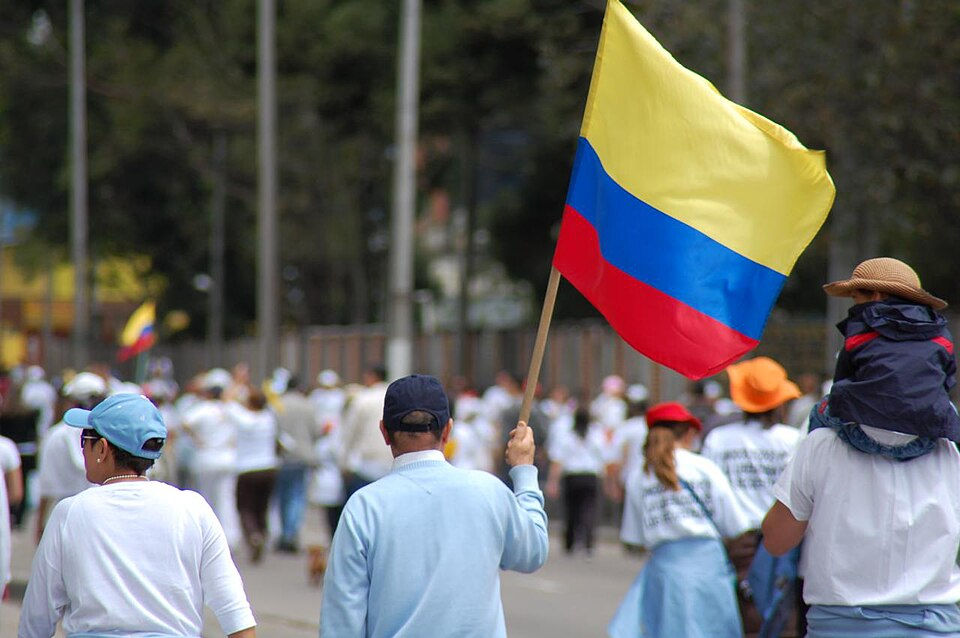
![Protest march in Manila, Philippines [Image credit: Mico Medel/Pexels]](https://static.wixstatic.com/media/f05ed1_9c58ce05542e490eabd92eaea99a9b01~mv2.jpg/v1/fill/w_980,h_656,al_c,q_85,usm_0.66_1.00_0.01,enc_avif,quality_auto/f05ed1_9c58ce05542e490eabd92eaea99a9b01~mv2.jpg)
Introduction
On April 24, 2026, the Pre-Trial Chamber of the International Criminal Court (ICC) found substantial grounds to believe that Rodrigo Duterte, the former president of the Philippines, had committed the crimes against humanity of murder and attempted murder in the context of his administration’s “war on drugs.” As Duterte faces trial before the ICC for his role in a drug war policy that promoted police extrajudicial killings (EJKs) of alleged drug suspects, his successor, President Ferdinand Marcos Jr., has declared that the “war on drugs” is over and a purportedly less violent “anti-drugs campaign” will take its place. However, rather than adopting a humane, health-centered, and rehabilitative approach to drug policy, Marcos’ rebranding of the drug war into a “bloodless” campaign has obfuscated the continuing violence faced by urban poor communities targeted by anti-drug operations in the Philippines.
Duterte’s Drug War
Launched in 2016, the “war on drugs” was Duterte’s approach to drug trafficking networks operating in the Philippines, including those linked to neighboring nations such as China. Yet Duterte’s drug policy was underpinned by his populist, strongman persona: he would enforce law and order by killing anyone he characterized as a criminal or suspected criminal involved in the drug trade. This policy originated during his time as mayor of Davao City, Mindanao, the southernmost region of the Philippines. During his mayoral tenure, Duterte emboldened and encouraged local police to commit extrajudicial killings and enforced disappearances of suspected criminals, with the stated goal of making Davao a safer city. The “war on drugs” took this Davao model and expanded it to a nationwide scale, implemented by the Philippine National Police (PNP) in concert with local government units (LGUs), which monitored and reported alleged drug suspects in their communities.
Through the implementation of “Operation Tokhang,” Philippine police conducted “knock and plead” operations on suspected drug users and sellers in barangays (neighborhoods) throughout the country. “Tokhang” is an amalgamation of Bisaya words for “knock” and “plead.” The goal was to clear these barangays of drugs by convincing drug users to report themselves to the LGUs and be placed on a watchlist, which the police would use to conduct visits and encourage them to enter rehabilitation programs.
These knock-and-plead operations resulted in the deaths of thousands of people. The government has reported over 6,000 deaths in its police anti-drug operations, but human rights groups argue that the number is much closer to 30,000, when accounting for killings perpetrated by vigilante gunmen that reportedly acted on behalf of police. The number of deaths that occurred during Duterte’s presidential administration continues to be disputed, as the government stopped publicly releasing statistics on certain drug-related deaths in 2018.
Duterte left the presidential office in 2022 and ran again for the mayoral seat of his hometown, Davao, in the 2025 midterm elections, winning the office in a landslide. However, in March 2025, Duterte was arrested in the Philippines by Interpol and has since been detained at the ICC detention facility in Scheveningen, The Hague, Netherlands, where he awaits trial for crimes against humanity before the ICC. The trial is scheduled to begin in November 2026.
Marcos’ Anti-Drug Campaign
President Ferdinand Marcos Jr. was elected in 2022 and quickly sought to distinguish himself from his predecessor’s approach to the war on drugs. This was partly informed by the United Nations (UN) Joint Programme for Human Rights between the Philippine government and the UN, which lasted from 2021 to 2024. The Joint Programme was developed in response to mounting reports of the drug war’s high death toll and to a 2020 resolution by the UN Human Rights Council to provide technical assistance to the Philippines for developing public health and human rights-based approaches to drug policy.
To distinguish himself from Duterte, Marcos proclaimed that the “war on drugs” had concluded and that his administration would launch a bloodless “anti-drug campaign.” This campaign would focus on health, rehabilitation, and social development of suspected drug users rather than primarily emphasizing law enforcement and punitive measures for those charged under the country’s Republic Act (R.A.) 9165, or the “Dangerous Drugs Law.” Most notably, this shift was reflected in policy changes adopted by the Dangerous Drugs Board (DDB) and implemented by the Philippine Drug Enforcement Agency (PDEA), the two executive bodies designated under R.A. 9165 to regulate drug possession and sale.
However, while the primary policymaking approach to drugs adopted by the Philippines’ executive branch has shifted, this has not been accompanied by any legislative reforms to the existing legal and policy framework that enabled the punitive and violent drug war approach in the first place. For example, R.A. 9165 imposes severe penalties for personal possession of certain scheduled drugs, with prison sentences ranging from 12 years to life. In conjunction with this strict penalty structure, the law also grants PDEA broad authority to conduct searches, seizures, and surveillance of suspected violators. This contravenes international human rights standards on drug law and policy, particularly the principle of proportionality, which the UN Human Rights Committee has clarified requires any restriction on the exercise of rights and freedoms to be proportionate to the interest protected.
Additionally, the executive policy that launched the drug war in July 2016 on Duterte’s first day in office—Command Memorandum Circular 16-2016—has neither been rescinded nor amended during Marcos’ term in office. This Circular guides the DDB, PDEA, PNP, and local police nationwide in implementing Operation Tokhang and the barangay clearance programs that fostered thousands of killings under Duterte. The Circular itself lists “neutralization” of drug users and sellers as one of the main goals of anti-drug operations. “Neutralization” is widely understood as a euphemism referring to the extrajudicial killings of those on LGU watchlists, often carried out by police and affiliated masked gunmen. Thus, without the formal rescission or repudiation of the underlying executive policy of the “war on drugs,” the Marcos administration’s new “campaign” rests on the same violent, unlawful foundation.
Continued Impunity for EJKs
According to data from the University of the Philippines DAHAS program (covering the period from 2016 to 2025), the number of extrajudicial killings has dropped dramatically compared with Duterte’s administration as a whole (2016-2022) and the first half of Marcos’ term (2022-2028). However, violence persists. Hundreds of extrajudicial killings have been committed by police and their non-state agents against the same populations of alleged drug users and sellers targeted during Duterte’s drug war every year of Marcos’ term. During Marcos’ first year in office, 342 people were killed in connection with anti-drug operations, compared with the 302 reportedly killed in the final year of the Duterte administration. As of July 2026, DAHAS has recorded 1,291 drug-related killings during the Marcos administration.
In addition to extrajudicial killings, human rights groups have continued to document other abuses committed during anti-drug operations implemented by the PNP, including arbitrary arrests, surveillance of individuals placed on LGU drug watchlists (without due process or oversight), intimidation of witnesses to extrajudicial killings, and abuses within mandatory rehabilitation centers, which function more like de facto prisons. These reported abuses and human rights violations undermine the public health and human rights-based commitments made by the Philippine government after concluding the UN Joint Programme.
Furthermore, the Philippine Department of Justice (DOJ) and other domestic investigative bodies have failed to investigate, prosecute, and punish those implicated in past and ongoing drug war killings. As of July 2026, only nine police officers have been prosecuted and convicted for crimes committed in the course of anti-drug operations. This limited level of domestic accountability amounts to State acquiescence to extrajudicial killings that undermines the Philippines’ obligations to protect, respect, and fulfill human rights—especially the right to life—under international and domestic law.
Former Justice Secretary and current Ombudsman, Jesus Remulla, has reported that there is insufficient evidence to domestically investigate and prosecute the extrajudicial killings committed during the previous Duterte administration. Yet the Marcos administration has been actively resistant to cooperating with the ICC’s investigation into the drug war, which covers only crimes committed from 2011 to 2019, and has rejected calls to rejoin the Rome Statute. This reluctance to cooperate suggests that Marcos has little interest in supporting international accountability efforts for crimes against humanity while extrajudicial killings continue with impunity throughout the Philippines, potentially reflecting concerns that greater international scrutiny could eventually extend to his own administration.
Launch of Domestic Truth Commission
In May 2026, Filipino civil society groups launched a Truth and Reconciliation Commission to investigate the killings and abuses perpetrated during the drug war and to produce a comprehensive historical record of these cases. While the Commission is civilian-led, a potential outcome of its investigation and reporting could be future domestic or international prosecutions that rely on the legal and evidentiary findings generated through its investigations. For example, its findings could help establish that there was a widespread and systematic attack against alleged drug users, many of whom came from the same urban poor communities throughout the Philippines. This could support prosecutions before an international tribunal like the ICC, but the Philippines also retains legislation that grants domestic courts jurisdiction to prosecute atrocities such as crimes against humanity.
This independent fact-finding initiative is important because the Philippine government stopped publicly releasing some statistics on drug war-related killings in 2018–specifically, the recorded number of “homicides under investigation,” which covered killings conducted by non-state agents allegedly affiliated with police. Therefore, the Commission has the potential to fill a crucial gap in comprehensive documentation and analysis of the Philippines’ anti-drug operations under the former administration. This effort also aligns with the broader transitional justice framework outlined by the UN Secretary-General, which aims to guide societies in recovering after large-scale violence or atrocities. This framework recognizes that accountability requires a combination of prosecution, truth-telling, memorialization, and survivor-centered advocacy to support lasting peace, security, and the rule of law.
Transitional justice is also central to ensuring non-repetition of such human rights violations, which is particularly important in the Philippine context given that extrajudicial killings continue without proper investigation or prosecution even after the nominal “conclusion” of the drug war. Further, assurances of non-repetition are critical for the families of victims of extrajudicial killings, as well as the advocacy groups that support them, as many have openly criticized Duterte’s drug war and cooperated with the ICC during its investigations and prosecution of the former president. Their safety and physical security remain at risk in light of the continued political prominence of the Duterte family, including the former president’s daughter, Sara Duterte, who serves as the current Vice President and has announced plans to run for president in 2028. Without addressing the consequences of Duterte’s drug war, or stopping the continuing extrajudicial killings underlying Marcos’ anti-drug campaign, the Philippines risks repeating the same patterns of violence.
Conclusion
Over the long term, the underlying legal framework for drug policy in the Philippines should be reformed to better meet international human rights standards and move away from the punitive approach to drugs that enables ongoing police abuses. Ahead of institutional reform, the Philippines must prioritize the protection of due process and the rights to life, liberty, and security in its enforcement of the existing drug law. Extrajudicial killings cannot continue as a permissible consequence of the anti-drug campaign, nor can the Philippine government effectively acquiesce to the continued killings of alleged drug users by failing to investigate, prosecute, and punish the perpetrators. By allowing over 1,200 EJKs to continue with impunity, the Marcos administration has, in fact, not ended the “war on drugs” for which Duterte is currently being prosecuted before the ICC. Instead, the “war on drugs” has simply gone underground, buried beneath the ostensibly inoffensive label of a “bloodless” campaign that is less flashy than its predecessor, but no less lethal.
Glossary
Anti-drugs campaign: The national policy under the Marcos administration to reduce and punish the sale and use of drugs in the Philippines.
Barangay: The smallest unit of government in the Philippines (translated as "neighborhood”).
Bisaya: A language spoken in the southern Philippines, sometimes referred to as Cebuano.
Crimes against humanity: Under the Rome Statute (Article 7), these are acts committed as part of a widespread or systematic attack directed against any civilian population.
Dangerous Drugs Board: The Philippines’ main policymaking body to address drug control.
Dangerous Drugs Law: Republic Act 9165, which regulates and punishes the sale, possession, and use of illegal drugs.
Extrajudicial killing: A killing carried out without legal proceedings, often by government agents or armed non-state actors, in violation of human rights law.
International Criminal Court: The international tribunal formed by the Rome Statute to investigate and prosecute individuals accused of grave crimes such as genocide, war crimes, aggression, and crimes against humanity.
“Knock and plead” operations: The law enforcement strategy of the drug war, where police visit alleged drug suspects and ask them to stop using drugs, also known as Operation Tokhang.
Local government units: The subdivisions of government under the Philippines’ national government, including provincial governments, cities/municipalities, and barangays.
Ombudsman: The official appointed to investigate individuals’ complaints against public officials or institutions.
Operation Tokhang: Derived from the Bisaya words toktok ("knock") and hangyo (“plead”), the main operational modality of the drug war.
Philippine National Police: The national police force of the Philippines, which operates under the Department of the Interior and Local Government, rather than city governments.
Populist: A politician who seeks to mobilize broad popular support by presenting themselves as the voice of ordinary people against political elites.
Rome Statute: The international treaty that established the International Criminal Court in 2002, to prosecute grave crimes when national courts cannot do so.
State acquiescence: The concept in international law that acknowledges State consent to certain acts when the government is silent or fails to act in response to a known situation (such as widespread human rights violations).
Transitional justice: The framework for addressing the legacy of atrocities to promote long-term, sustainable peace, through prosecution, truth-telling, memorialization, and other measures.
Truth and Reconciliation Commission: The Philippines’ civilian-led body formed to investigate the drug war and help victims share their testimonies of EJKs and other abuses.
UN Human Rights Committee: A treaty body of independent experts that monitors the implementation of the International Covenant on Civil and Political Rights.
UN Human Rights Council: A United Nations intergovernmental body with the mandate to promote and protect human rights in UN member states.
UN Joint Programme on Human Rights: A three-year capacity-building initiative launched in 2021 to help the Philippines strengthen domestic accountability mechanisms and promote human rights-based approaches to drug control.
UN Secretary General: The head of the United Nations, responsible for addressing global issues.
War on drugs: A campaign launched in 2016 by former Philippine President Rodrigo Duterte to crack down on illegal drugs.
Widespread and systematic attack: A concept in international criminal law that is the core element of a charge of crimes against humanity, where violence is directed at civilians on a massive scale.