Shrinking Civic Space and Aid to Civil Society
Author: Mathilde Guenin, MS
October 28, 2026
View the interactive report on Flourish

Shrinking Civic Space
Monitoring Civic Space
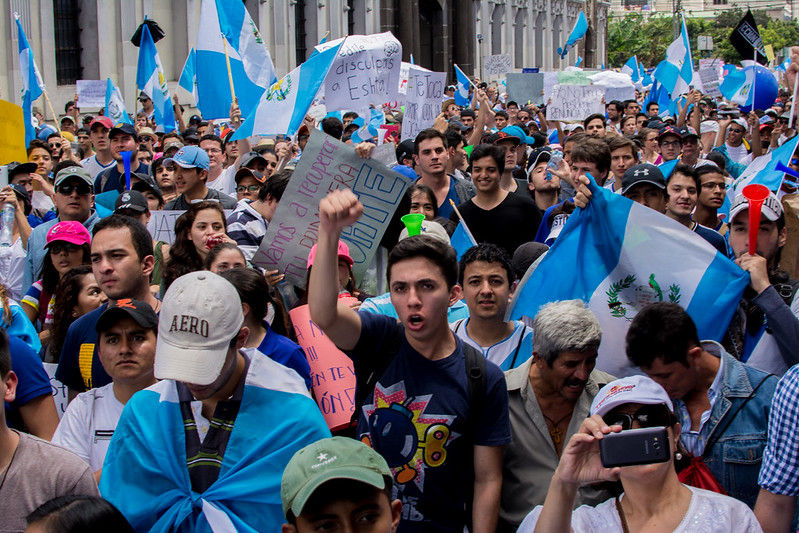
Civic space is the environment that allows people and Civil Society Organisations (CSOs) to speak out, organise, assemble peacefully, access information, and participate in public life.
CSOs are essential to achieving the Sustainable Development Goals, defending human rights, protecting the environment, and supporting democratic participation. By engaging with governments, businesses, and local communities, they help ensure policies respond to people’s needs and reach those who are most vulnerable. However, CSOs in many countries face restrictive laws, intimidation, and other pressures that limit their ability to operate freely.
When civic space is restricted or closed:
People and CSOs face severe restrictions on their ability to speak, organise, assemble, and share information.
These restrictions can include restrictive laws, surveillance, intimidation, censorship, harassment, arbitrary detention, and attacks on activists and organisations.
Human rights defenders may face imprisonment, torture, threats, or killing.
The CIVICUS Monitor assesses civic space based on freedoms of association, peaceful assembly, and expression, as well as the state’s responsibility to protect these rights. Countries are scored from 1 to 100 and classified as Open (81–100), Narrowed (61–80), Obstructed (41–60), Repressed (21–40), or Closed (1–20).

In 2025, 83 countries were rated either ‘Closed’ or ‘Repressed’.
In total, 33 countries were classified as closed: Afghanistan, Azerbaijan, Bahrain, Belarus, Burundi, China, Cuba, Djibouti, Egypt, Equatorial Guinea, Eritrea, Eswatini, Ethiopia, Hong Kong, Iran, Iraq, Laos, Myanmar, Nicaragua, North Korea, Oman, Occupied Palestinian territories, Russia, Saudi Arabia, Sudan, Syria, Tajikistan, Turkmenistan, United Arab Emirates, Uzbekistan, Venezuela, Vietnam, and Yemen.
According to CIVICUS, only 7% of the global population lives in free or relatively open civic space.

What does a score below 10 mean?
Countries with scores below 10 are at the very bottom of CIVICUS's Closed category, indicating extremely severe restrictions on freedom of association, peaceful assembly, and expression.
Countries with the Most Restricted Civic Space in 2025 (CIVICUS Score <10)


Focus on North Korea, Eritrea, and Turkmenistan:
The countries with the lowest civic-space ratings according to CIVICUS.
Other indicators:
Press Freedom, by Reporters Without Borders, 2025, out of 180:
Eritrea — 180th | North Korea — 179th | Turkmenistan — 174th
Corruption Perceptions Index by Transparency International, 2024/25, out of 180:
Eritrea — 177th | North Korea — 172nd | Turkmenistan — 165th
Freedom in the World by Freedom House, 2026: All three rated "Not Free"

Aid to Civil Society
Supporting Civil Society as Civic Space Shrinks
The Development Assistance Committee (DAC) brings together major development donors, including the United States, France, and the EU institutions. These donors provide Official Development Assistance (ODA), which is aid intended to promote the economic development and welfare of developing countries.
ODA can be provided directly to CSOs and through them:
To CSOs: the donor gives money directly to the organization. The organization has more freedom to decide how to spend it.
Through CSOs: The donor hires the organization to run a specific project. The money is tied to the donor's goals; hence, the CSOs act as implementing partners.
CSOs help donors reach communities that would otherwise be hard to access in closed civic space. Their local knowledge, established networks, and presence on the ground allow them to identify and respond to local needs, reach vulnerable populations, and deliver assistance effectively.
In 2024, the United States channeled USD 11.5 billion in ODA to and through CSOs, the largest amount among DAC donors, followed by the EU institutions, Germany, and the United Kingdom.

Who Funds CSOs in Closed Civic Spaces?
The breakdown below shows ODA channeled through CSOs by selected DAC donors to countries classified as closed by CIVICUS.
In 2024, Ethiopia received the largest amount, around USD 1.1 billion in ODA channeled through CSOs, followed by Syria with around USD 700 million. In contrast, countries with some of the world’s most restricted civic spaces, such as Eritrea and Turkmenistan (see slides 5 and 6), received among the lowest amounts of ODA channeled through CSOs. However, this aid can be vital in closed civic spaces, helping actors defend fundamental freedoms and human rights and reach vulnerable communities.


The breakdown below shows how much key donors channeled aid/ODA through CSOs in countries with closed civic spaces.
The United States channeled the largest amount through CSOs across countries with closed civic space in 2024, around USD 2.3 billion in total. Of this, around USD 780 million went to Ethiopia and USD 413 million to Syria, with the remainder distributed across other countries.


According to CIVICUS: Key Recommendations for Donors
Provide long-term, flexible core funding to civil society in shrinking civic spaces.
Support advocacy groups working under increasing civic space restrictions.
Involve CSOs in decisions and adapt funding as contexts change.
Prioritize security and protection for human rights defenders and organisations at risk.
Fund safety resources, including equipment, training, and security support.
Adapt funding to new forms of civic action, including youth-led movements and organising.
As civic space becomes increasingly restricted, CSOs continue to play an important role in reaching communities and delivering assistance. But the funding is only part of the story: the way it is provided also matters. Organisations need sufficient flexibility, security and autonomy to operate effectively in restrictive environments.

Glossary
Civic space: The environment that enables people and groups to participate in the political, economic, social, and cultural life of their societies.
Civil Society Organisation (CSO): Organisational structures whose members serve the general interest through a democratic process and which play a role as mediators between public authorities and citizens.
Development Assistance Committee (DAC): The OECD committee that brings together major providers of development co-operation to discuss issues related to development assistance and co-operation.
Flexible funding: Funding that allows organizations to adapt how they use resources in response to changing circumstances and needs.
Marginalized: to treat someone or something as if they are not important.
Official Development Assistance (ODA): Government aid that promotes and specifically targets the economic development and welfare of developing countries.
Repression: the use of force or violence to control a group of people.
Restrictive: limiting the freedom of someone or preventing something from growing.
Vulnerable: able to be easily physically or mentally hurt, influenced, or attacked.
References
CIVICUS Monitor. CIVICUS Monitor. 2026. https://monitor.civicus.org/
CIVICUS Monitor. Eritrea retains lowest ranking globally on press freedom index, UN mandate renewed. 2025. https://monitor.civicus.org/explore/eritrea-retains-lowest-ranking-globally-on-press-freedom-index-un-mandate-renewed/
CIVICUS Monitor. Global Press Release. 2025 https://monitor.civicus.org/press_release/2025/global-press-realease/
CIVICUS Monitor. North Korea: Regime maintains its control of society through bans on foreign media and cross-border communications, surveillance and repressive laws. 2025. https://monitor.civicus.org/explore/north-korea-regime-maintains-its-control-of-society-through-bans-on-foreign-media-and-cross-border-communications-surveillance-and-repressive-laws/
CIVICUS Monitor. Tightening digital controls and domestic and transnational repression. 2026. https://monitor.civicus.org/explore/tightening-digital-controls-and-domestic-and-transnational-repression/
DAC-CSO Reference Group. The role of civil society organisations in development. 2020. https://www.dac-csoreferencegroup.com/post/the-role-of-civil-society-organisations-in-development
Freedom House. Freedom in the World 2026: The Growing Shadow of Autocracy. 2026. https://freedomhouse.org/report/freedom-world/2026/growing-shadow-autocracy
Human Rights Watch. World Report 2026: Eritrea. 2026 https://www.hrw.org/world-report/2026/country-chapters/eritrea
Human Rights Watch. World Report 2026: North Korea. 2026. https://www.hrw.org/world-report/2026/country-chapters/north-korea
Human Rights Watch. World Report 2026: Turkmenistan. 2026. https://www.hrw.org/world-report/2026/country-chapters/turkmenistan
OECD. OECD Creditor Reporting System (CRS): Official Development Assistance (ODA). 2024/2025. https://data-explorer.oecd.org/?lc=en&fs%5B0%5D=Topic,1%7CDevelopment%23DEV%23%7COfficial%20Development%20Assistance%20%28ODA%29%23DEV_ODA%23&pg=0&fc=Topic&bp=true&snb=23&isAvailabilityDisabled=false&page=0
Reporters Without Borders (RSF). World Press Freedom Index. 2025. https://rsf.org/en
Transparency International. Corruption Perceptions Index. 2025. https://www.transparency.org/en