Living in Limbo: Dignity, Containment, and Alternative Reception at Pikpa
Author: Madi Carpenter
February 24, 2026
![[Image source: Lesvos Solidarity]](https://static.wixstatic.com/media/e28a6b_ec1deeb79faa43afaae2df94c0e92517~mv2.png/v1/fill/w_942,h_704,al_c,q_90,enc_avif,quality_auto/e28a6b_ec1deeb79faa43afaae2df94c0e92517~mv2.png)
As migration patterns continue to intersect with the slow evolution of modern immigration policy, community-based alternatives that emerge to fill gaps left by the state play a critical role in how migrant reception is understood and practiced. “Hotspots” that develop during periods of increased migration are frequently followed by restrictive enforcement measures, as illustrated by the Greek government’s response in 2015 and 2016 to rising arrivals across the Mediterranean and through the Greek islands by migrants seeking access to Europe. As overcrowded refugee camps deteriorated into slum-like conditions and images of children who drowned during their journeys reached global audiences, the state’s primary response was to halt movement and reinforce border controls. Yet the political and media attention directed toward new arrivals consistently obscured the realities facing those who had already reached Greek territory. In this context of restriction and neglect, community organizations emerged to provide essential forms of care for migrants caught in the crosshairs of institutional neglect. Among these widespread initiatives, an alternative reception space called Pikpa emerged on the island of Lesvos. Pikpa became a reimagining of care and collective responsibility beyond the reception models created through state-led migration management. By examining case studies like Pikpa as a site of non-state reception, it can be demonstrated that grassroots models are effective in challenging strict border control and containment. These insights extend beyond the Greek context by contributing to broader debates on reception and autonomy.
The European Union’s hotspot approach was introduced in 2015 as a mechanism intended to coordinate the reception of arriving migrants by facilitating identification, registration, and fingerprinting and by linking these processes to channels such as asylum procedures, particularly in Greece and Italy. The approach helped ensure that most arriving migrants were identified and registered, but implementation faced significant challenges due to insufficient infrastructure. However, multiple institutional reviews have highlighted persistent overcrowding and degrading material conditions in reception and identification centres on the Greek islands, with UNHCR repeatedly urging improvements to safety, living standards, and procedural efficiency amid prolonged stays. Hotspots in Greece, such as Lesvos, Chios, Samos, and Leros, were legally established as reception and identification centres but became closely linked to containment policies under the 2016 EU-Turkey Statement, which restricted onward movement to the mainland.
Scholarship on the impact of alternative hosting and community-based reception models for refugees has underscored their effectiveness across many different European contexts. Across reception locations in the United Kingdom, Germany, France, and Slovakia, researchers found that community-based models often foster stronger psychosocial integration and a deeper sense of belonging than institutional camps, particularly through immersion and shared responsibility. Pikpa represented a reconfiguration of reception. Rather than emphasizing containment and carceral frameworks, it challenged them by demonstrating how dignity, autonomy, and shared accountability could be embedded in the architecture of reception models, even in the shadow of the other large camps in the Greek Islands.
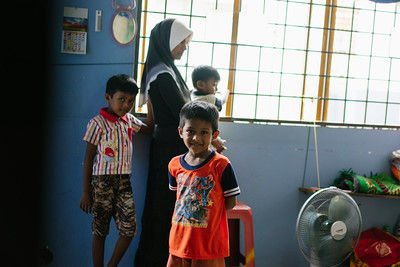
Located in the Neapoli area on the island of Lesvos, which is also home to the notorious Moria refugee camp, Pikpa, also known as Lesvos Solidarity, was established in 2012 to support refugees and other forcibly displaced people arriving through the Greek islands. Widely recognized as one of Greece’s first self-organized reception camps, Pikpa offered community-oriented spaces for gathering, language learning, workshops, vocational training, and psychosocial support. This model intentionally reimagined migrant reception as a transitional and dignified process, positioning the camp as a bridge toward autonomy and integration rather than a site of containment, in stark contrast to the conditions that characterized many large-scale refugee camps.
While large facilities such as the Moria Reception and Identification Center were organized around containment and administrative processing, Pikpa prioritized safety and stability. It was conceived as a temporary yet dignified space, rather than a site of confinement. Human rights organizations consistently described Pikpa as an alternative that offered materially better living conditions and a stronger sense of security for residents unable to remain safely in overcrowded camps.
Understanding Pikpa as an alternative governance model requires moving beyond the language of humanitarian “support” to examine how everyday life was organized. In practice, Pikpa provided shelter, food, healthcare access, and psychosocial support, while also establishing norms and routines that shaped relations between residents and volunteers. Safety was maintained through community accountability and shared responsibility. Decision-making reflected a clear differentiation of roles. Residents participated in shaping daily life, while volunteers and coordinators managed logistics and external coordination. The camp also featured an upcycling workshop and small shop, run collaboratively by residents and refugees, that transformed discarded life jackets, dinghies, tents, and other materials left behind during migration journeys into handmade goods, with proceeds reinvested into the camp to help sustain its operations and programs. Scholarship on solidarity initiatives in Greece has emphasised that these spaces functioned by producing meaningful forms of governance grounded in mutual aid rather than formal authority. Within this framework, Pikpa did not replace the state; instead, it reconfigured how care and responsibility were distributed in the absence of adequate formal governance.
Pikpa was ultimately shut down by the Greek government in late 2020, despite sustained warnings from human rights organizations and testimony from those who lived and worked within the camp about what its closure would mean. On October 30th, 2020, Greek authorities conducted an unannounced police operation to evict the Pikpa camp, forcibly transferring 74 vulnerable residents, including 32 children, to Kara Tepe. The eviction was carried out without written orders, access to legal counsel, or adequate safeguards, despite pending asylum cases. Lesvos Solidarity condemned the operation as “unacceptable and absurd,” stressing that Pikpa had functioned as a licensed, humane space for vulnerable refugees. In the statement following the camp’s closure, Pikpa coordinator Efi Latsoudi described the space as one built on solidarity rather than control. She said, “We remain strong in our convictions, and we will only get stronger as the struggle continues for a Europe where everybody can be welcomed and live in safety and dignity, with equal chances for all.” The closure of Pikpa marked the disappearance of a rare reception space organized around collective responsibility.
For residents, the loss was felt as a return to the violence of waiting, where life was no longer oriented towards care. What Pikpa revealed, and what its closure ultimately underscored, is that humane reception is not an abstract policy ideal but something lived and felt in the smallest details of daily life. This is perhaps best expressed in the words of Mina, an Afghan refugee who lived at Pikpa and spoke of what it meant to find a dignified space like the squat.“I wanted to be a woman, not a slave. I was in Iran for three years, where I was deprived of my human rights. And now for a year and two months, I live in a limbo, in Greece, which is the largest prison for refugees... That means I cannot leave and I cannot stay... I am a woman who fled from oppression, war, insecurity, rape and who took refuge in Europe... I now live in a camp that is a paradise compared to other camps... where human dignity, security, rights for women are preserved but the government has decided to close this camp. I hope for the release of all refugees, especially oppressed women, from this prison.”
Mina’s struggle is the struggle of so many refugees who have found solace in spaces that are a stark contrast to the carceral camps they were able to escape from. The reimagining of reception to fit a more humane model benefits everyone, not just the refugees seeking safety. Above all, migrant reception should be reflective of the full humanity of those impacted rather than problems to be managed. Forced migrants are not solely defined by displacement. They carry complex histories, and they also have futures. This must be foundational to any policy being put in place as a management system to facilitate a reception process that is dignified and equal.
Glossary
Alternative Governance Model: A system of organizing care, decision-making, and daily life that operates outside formal state institutions. In this article, the term refers to community-led practices at Pikpa that distributed responsibility through shared roles, mutual accountability, and collective organization rather than state authority.
Asylum Procedure: The legal process through which individuals seek international protection by applying for asylum, typically involving registration, interviews, and adjudication by state authorities.
Carceral Conditions: Living environments characterized by surveillance, restriction of movement, and control, resembling punitive or prison-like settings. The term is used to describe conditions in large-scale reception camps such as Moria.
Community-Based Reception: Forms of migrant reception organized by local communities, volunteers, or solidarity groups that prioritize care, dignity, and social inclusion over containment and administrative control.
Containment: Policies and practices aimed at restricting the movement of migrants, often confining them to specific geographic areas or facilities. In the Greek context, containment was reinforced through hotspot camps and restrictions on onward travel to the mainland.
Dinghies: A small, lightweight inflatable boat used by migrants or asylum seekers to cross bodies of water, most commonly the Mediterranean Sea.
Displacement: Refers to the forced movement of people from their homes or places of habitual residence.
EU-Turkey Statement: A political agreement between the European Union and Turkey that aimed to curb irregular migration to Europe by returning certain migrants from Greece to Turkey and limiting onward movement from the Greek islands.
Hotspot Approach: A European Union policy framework introduced in 2015 to manage increased arrivals of migrants through centralized reception and identification centres, focused on registration, fingerprinting, and processing asylum claims.
Limbo: A condition of prolonged uncertainty in which individuals are unable to move forward or return, often due to legal, administrative, or political barriers.
Migrant Reception: The systems, spaces, and practices through which newly arrived migrants are accommodated, registered, and supported upon arrival in a host country.
Mutual Aid: A form of collective support based on reciprocity and solidarity, where individuals and communities meet each other’s needs without reliance on formal institutional hierarchies.
Psychosocial Support: Services that address psychological well-being and social stability, including counseling, community activities, and trauma-informed care.
Self-Organized Reception Camp: A reception space created and managed by civil society actors rather than the state, often emphasizing participation, dignity, and community governance.
Solidarity Initiatives: Grassroots efforts, often led by local residents, activists, and migrants themselves, that respond to migration through collective care, advocacy, and mutual support.
References
Aegean University. Moria Site Profile. SCIREA, Mar. 2019, https://scirea.aegean.gr/images/Moria_Site_Profile_Mar2019.pdf.
Al-Hamad, A., et al. “Mapping Care Practices and Service Delivery Models for Refugee and Displaced Families in Private Hosting Arrangements: A Scoping Review.” Nursing Reports, vol. 15, no. 8, 11 Aug. 2025, p. 293. MDPI, https://doi.org/10.3390/nursrep15080293.
European Parliament. EU-Turkey Statement Action Plan. European Parliament, https://www.europarl.europa.eu/legislative-train/theme-towards-a-new-policy-on-migration/file-eu-turkey-statement-action-plan.
European Parliament. The EU-Turkey Statement: A Briefing. European Parliamentary Research Service, 2023, https://www.europarl.europa.eu/thinktank/en/document/EPRS_BRI%282023%29754569.
Human Rights Watch. “Save Dignity, Save Pikpa and Kara Tepe.” Human Rights Watch, 30 Sept. 2020, https://www.hrw.org/news/2020/09/30/save-dignity-save-pikpa-and-kara-tepe.
Infomigrants. Kara Tepe. Infomigrants, https://www.infomigrants.net/en/tag/kara%20tepe/.
Lesvos Solidarity. “History.” Lesvos Solidarity, https://lesol.gr/history/.
Lesvos Solidarity. Lesvos Solidarity Shop. https://lesvossolidarityshop.org/.
Lesvos Solidarity. Facebook post, https://www.facebook.com/lesolgr/posts/a-few-days-before-the-eviction-of-pikpa-camp-one-of-pikpas-residents-mina-asked-/2802385286703551/.
Mull, Jason. The Architecture of Displacement. University of Brighton, https://cris.brighton.ac.uk/ws/portalfiles/portal/23477350/MULL.pdf.
Statewatch. “Greece: Eviction of the Pikpa Camp; Statement from Lesvos Solidarity.” Statewatch, Nov. 2020, https://www.statewatch.org/news/2020/november/greece-eviction-of-the-pikpa-camp-statement-from-lesvos-solidarity/.
UNHCR. “Inside Moria Refugee Camp.” Australia for UNHCR, UN Refugee Agency’s national partner in Australia, www.unrefugees.org.au/our-stories/inside-moria-refugee-camp/.
UNHCR. “Shelter in the Struggle: As Winter Arrives in Greece, EU Urged to Speed Relocations.” UNHCR – The UN Refugee Agency, https://www.unhcr.org/us/news/briefing-notes/shelter-struggle-greece-winter-arrives-eu-urged-speed-relocations.