10 Lives Lost a Day: Understanding Femicide in Mexico
Author: Mahika Datta
December 16, 2025
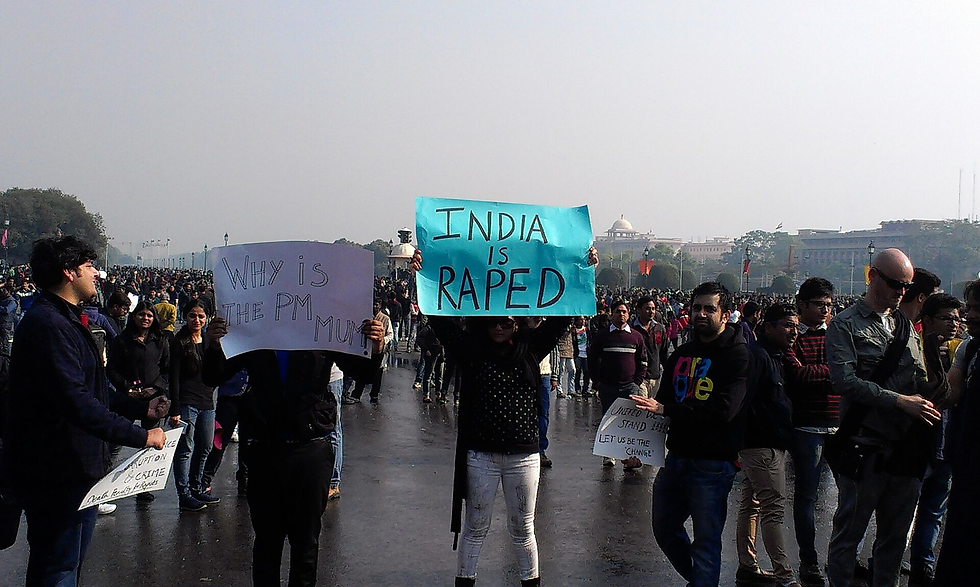
![Hundreds of women take to the streets in Mexico City, Mexico, on November 25, 2018, as part of the International Day for the Elimination of Violence Against Women. Night Una Menos translates to “Not one [woman] less”. [Image credit: Jair Cabrera/Nurphoto via Getty Images]](https://static.wixstatic.com/media/e28a6b_2a4f70a7d93d4e91af3e1dcb56d18cb6~mv2.png/v1/fill/w_980,h_573,al_c,q_90,usm_0.66_1.00_0.01,enc_avif,quality_auto/e28a6b_2a4f70a7d93d4e91af3e1dcb56d18cb6~mv2.png)
Introduction
Latin America is home to 14 of the 25 countries with the highest rates of femicide in the world, with Mexico being one of them (Diaz, 2021). Across Mexico, approximately 10 women and girls are killed every day and are forgotten, perpetuating a cycle of impunity. Ciudad Juárez in particular, a major border crossing with the United States, has become especially emblematic of this crisis, with its legacy of dehumanizing victims and normalizing violence against women (Minard & Carmo, 2024). The crisis in Mexico further highlights the depth of systemic gender-based violence and institutional neglect within the country. Despite the introduction of “progressive” laws such as the General Law on Women’s Access to a Life Free from Violence, government failures continue to allow impunity to thrive. While feminist activism and movements have played an instrumental role in shaping national awareness and demanding accountability, entrenched patriarchal norms, inadequate enforcement, and political resistance continue to hinder meaningful progress.
Legal and Policy Framework
Early Cases and Governmental Response
A pivotal moment in the recognition of a femicide crisis in Mexico occurred in 2001 with the case of Gonzalez and Others vs Mexico State. This case pushed forward an uprising, where thousands of people organized a protest when the dead bodies of eight women were found in Ciudad Juárez (Chaparro Rucobo & Alexander, 2024). The discovery exposed the Mexican government’s failure to prevent, investigate, and punish gender-based crime or address femicide. The case ultimately reached the Inter-American Court of Human Rights, where it established a precedent for holding states accountable for gender-based violence.
The General Law on Women’s Access to a Life Free from Violence
Six years later, in 2007, the Mexican government enacted the General Law on Women’s Access to a Life Free from Violence. This law established the legal framework for preventing, punishing, and eradicating violence against women by outlining responsibilities of the government to protect women. However, it was found to have no impact in a majority of Mexico’s 32 states, even two years after its passing. Amnesty International explains that it was essentially a “lack of state-level commitment” that caused its downfall. Notably, the absence of effective coordination among agencies, minimal investment in domestic violence shelters, lack of enforcement mechanisms, and inconsistent integration of gender perspectives across judicial systems limited its success (Amnesty International, 2009). As a result, the law’s promise of safety and justice for women largely remained unrealized.
Institutional Failures and Case Studies
Impunity and Invisibilization of the Femicide Crisis
Despite legislative progress, femicide continues to be made invisible through institutional neglect. Across Mexico, “impunity remains rampant,” allowing perpetrators to act without fear of consequences and walk free. As UN activist Norma Andrade observed, “Even though violence against women is increasing, its visibility is going down.” Andrade, having been subjected to multiple counts of domestic violence and even losing her daughter to femicide, was documented in the film Norma, In Search of Justice, where she highlights the long-standing struggle to bring attention to disappearances and murders of women in Ciudad Juárez (Minard & Carmo, 2024).
Investigative Journalism and Judicial Negligence
Journalist Gloria Piña, winner of the Breach/Valdez Award for Journalism and Human Rights for her article “The Survivors: Forgotten by Justice,” documented legal loopholes, negligence, and lack of a gendered perspective in the legal system (United Nations, 2023). She brought attention to how a disproportionate number of cases were miscategorized: out of 1.7 million criminal investigations for violence against women, only 781 were registered as attempted failures. The remaining cases were downgraded to lesser offenses with lighter penalties, thus “brushing-off” the issue. Piña summarizes the problem with judicial negligence in a simple sentence: “The message the legal system is sending is that in Mexico there is impunity and that a woman can be attacked or killed.”
Feminist Activism and Public Mobilization
Grassroots Movements and National Protests
Feminist activism has been instrumental in reshaping Mexico’s perception of gender-based violence, as well as the national attention toward it. One of the initial movements was Coordinadora de la Mujer (Women’s Coordinator), which was formed in 1994 to raise public awareness around domestic violence and femicide. The movement has lasted for decades since, but has been met with growing discomfort where feminism is seen as a threat to current order and privileges regarding gender (Chaparro Rucobo & Alexander, 2024).
However, there has been an evident shift in feminist activism and public mobilization where more groups of women are standing up and bringing attention to the cause. For example, the Un Día Sin Nosotras (A Day Without Us) protest mobilized women across the country to stay home from work, school, and public life to demonstrate their economic and social contributions and, moreover, the loss that violence inflicts (Doubek, 2020). Ni Una Menos (Not One Less) is a pivotal movement in addressing femicide, inspiring a wave of women-led demonstrations all across Latin America. Women across the region advocate against and denounce femicide, while demanding systemic change through protests (Diaz, 2021). Their phrase “not one less” has become a rallying cry, bringing together women and advocating for visibility and justice. Mexico’s activism is also intertwined with global initiatives such as the 16 Days of Activism Against Gender-Based Violence and the International Day for the Elimination of Violence Against Women, which act as propellants for change.
Media, Culture, and Political Discourse
Cultural Attitudes Toward Femicide
Cultural norms play a powerful role in shaping public perceptions of femicide. Murders of women are often described as “crimes of passion,” “acts to defend family honor,” or as consequences of “improper female behavior.” These narratives reflect deeply ingrained social beliefs about masculinity, control, and the idea that women are the property of men. This cultural lens not only justifies violence but also contributes to backlash against women who reject traditional gender roles or assert independence (Chaparro Rucobo & Alexander, 2024).
Media Representation and Victim-Blaming
The media often elevates the problem by using misogynistic and victim-blaming language, “framing victims as responsible for their own deaths” (Chaparro Rucobo & Alexander, 2024). Such portrayals trivialize femicide and take away social recognition, making it seem like something that doesn’t need addressing. Another factor that prevents accurate portrayals of the femicide crisis is the fact that journalists investigating it face censorship, threats, and violence.
Political Responses and Denial
Political leadership has also played a role in minimizing the crisis. Notably, President Andrés Manuel López Obrador, who served as the 65th president of Mexico from 2018 to 2024, has publicly dismissed many reports of femicide, diluting the crisis. He claimed that the reports were exaggerated, or even fabricated, with them being “fake” and meant to add a bad light to the government (Chaparro Rucobo & Alexander, 2024). His refusal to address femicide cases before the end of his presidency illustrates the broader resistance within political structures against prioritizing women’s safety in Mexico.
Conclusion
Mexico’s femicide crisis highlights a gap in the protection of women and the enforcement of that protection. Institutional weaknesses, cultural norms, and political inaction continue to allow gender-based violence to thrive in Mexico. Despite formal laws intended to protect women, systemic failures and societal attitudes perpetuate impunity. Thus, meaningful change requires not only laws on paper but also effective enforcement, accountability, and societal recognition of women’s rights. Only through sustained commitment across institutions and society can the cycle of violence be challenged, not only in Mexico but in all the 25 countries with the highest rates of femicide.
There is, however, a cautious note of hope: the election of Claudia Sheinbaum as Mexico’s first female president in 2024 has ignited expectations. She has proposed constitutional reforms to guarantee “freedom from violence,” equal pay, and stronger gender protections, and she aims to prioritize femicide as a prosecutorial crime (O’Boyle & Martinez, 2024). Yet many feminist activists remain skeptical as they warn that without deep institutional reform and adequate resources, these promises may fall short. Symbolic progress will not be enough to dismantle the entrenched impunity that allows femicide to persist in Mexico.
Glossary
16 Days of Activism Against Gender-Based Violence – Global campaign to raise awareness and prevent violence against women and girls.
Andrés Manuel López Obrador – 65th President of Mexico (2018–2024), criticized for downplaying femicide.
Censorship – The suppression or removal of information that is considered unacceptable, and often considered politically threatening.
Ciudad Juárez – Mexican city with a high rate of femicide, symbolizing systemic gender-based violence.
Coordinadora de la Mujer (Women’s Coordinator) – Early feminist movement in Mexico focused on domestic violence and femicide awareness.
Crimes of passion – Murders committed in the heat of emotion, often used to justify violence against women.
Cultural norms – The shared expectations and rules that guide expectations and behaviors within a society.
Domestic violence – Abusive behavior in intimate relationships used to control or dominate a partner.
Enforcement mechanisms – Processes or institutions tasked with ensuring laws are applied and followed.
Femicide – The gender-based killing of women and girls, mainly perpetuated by men, often reflecting systemic discrimination or misogyny.
Feminist activism – Organized efforts to challenge gender inequality and advocate for women’s rights.
Gender-based violence (GBV) – Harm directed at individuals because of their gender, including physical, sexual, and psychological abuse.
General Law on Women’s Access to a Life Free from Violence (2007) – Mexican federal law aiming to prevent, punish, and eradicate violence against women.
Gloria Piña – Journalist documenting gender-based violence, judicial negligence, and impunity in Mexico.
Grassroots movements – Community-based initiatives advocating for social or political change.
Impunity – The failure to punish perpetrators, allowing them to act without consequences.
Institutional neglect – When governments or authorities fail to prevent, investigate, or prosecute crimes adequately.
Inter-American Court of Human Rights – Regional court that can hold states accountable for human rights violations, including gender-based crimes.
International Day for the Elimination of Violence Against Women – United Nations observance promoting awareness and action against gender-based violence.
Judicial negligence – The legal system’s failure to enforce laws or properly investigate crimes, especially gender-based violence.
Misogyny – Hatred, prejudice, or discrimination against women.
Ni Una Menos (Not One Less) – Feminist movement across Latin America denouncing femicide and advocating for systemic change.
Norma Andrade – Activist who lost her daughter to femicide and who fights for justice in Ciudad Juárez.
Patriarchal norms – Social structures that uphold male dominance and privilege over women.
Precedent – An earlier action that can be used as a guide when considering a subsequent and similar circumstance.
Propellants – Something that is capable of pushing something forward.
Systemic failures – Structural issues in institutions preventing justice and protection for women.
Trivialize – The act of making something seem less important or complex than what it really is.
Un Día Sin Nosotras (A Day Without Us) – Protest in Mexico where women refrain from work and public life to demonstrate their social and economic contributions and highlight the impact of violence.
Victim-blaming – Holding victims responsible for the violence committed against them.
References
Amnesty International. (2009, January 29). Mexico: two years on: the law to protect women has had no impact at state level. Amnesty International. https://www.amnesty.org/en/latest/press-release/2009/01/m-xico-dos-os-de-aprobada-ley-de-protecci-n-de-mujeres-sin-impacto-en-es/
Chaparro Rucobo, S. J., & Alexander, A. A. (2024). Public perceptions of feminicide and the feminist movement in Mexico. Politics & Policy, 52(6). https://doi.org/10.1111/polp.12640
Diaz, J. (2021, October 15). How #NiUnaMenos grew from the streets of Argentina into a regional women’s movement. NPR. https://www.npr.org/2021/10/15/1043908435/how-niunamenos-grew-from-the-streets-of-argentina-into-a-regional-womens-movemen
Doubek, J. (2020, May 9). Mexican Women Stay Home To Protest Femicides In “A Day Without Us.” NPR.org. https://www.npr.org/2020/03/09/813699719/mexican-women-stay-home-to-protest-femicides-in-a-day-without-us
Minard, N., & Carmo, A. (2024, December 5). Mexico: Boom in organised crime making femicide invisible, local activist says. UN News. https://news.un.org/en/story/2024/12/1157811
O’Boyle, B., & Martinez, A. (2024, October 3). Mexico’s first woman president announces reforms to battle gender discrimination. Reuters. https://www.reuters.com/world/americas/mexicos-first-woman-president-announces-reforms-battle-gender-discrimination-2024-10-03/
United Nations. (2023, July 3). “We’re here to tell it:” Mexican women break silence over femicides. OHCHR. https://www.ohchr.org/en/stories/2023/07/were-here-tell-it-mexican-women-break-silence-over-femicides