Exploring Global Gender Bias Through the Lens of Education
Author: Autumn Price
August 26, 2025
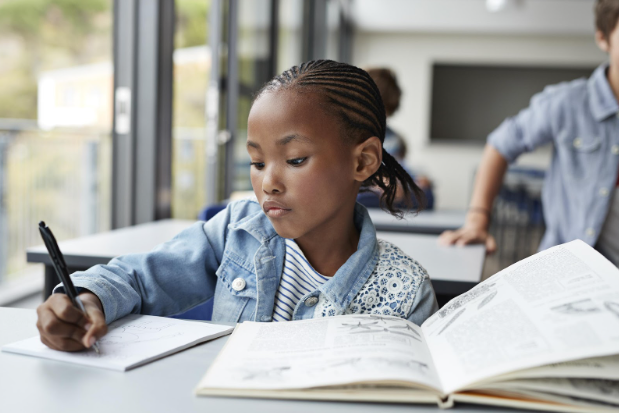
Each fall, students from pre-kindergarten all the way through 12 grade attend local schools to obtain an education in the West. Parents often have many options to choose from, such as public, private, religious, secular, or boarding school. Despite this freedom of choice, one factor that goes without question is that both genders will attend school. We see this gender integration in Western media all the time back to school commercials, clothing ads, and even school supply lists remind us that both boys and girls will learn in the classroom together. However, this way of life is not the norm for many other cultures around the world; many girls are denied the opportunity to attend school and build their own careers.
The United Nations’ Universal Declaration of Human Rights defines education as a human right, stating that it empowers individuals by providing economic and social mobility (United Nations, 1999). This document also states that fundamental, elementary education should be free and that parents may exercise their right to choose the kind of education their children receive. Understanding this concept means understanding that all children should have equal access to an education.
Consider Chad, a country in North Central Africa. Many of its citizens face unfathomable living circumstances that often lead to economic hardships, such as water shortages and the negative effects of climate change. Due to longstanding beliefs regarding gender roles, many young girls are given the task and burden of finding adequate water sources for their families and forced to forego their education in the process (Nerbe, 2025). Organizations such as UNICEF and the Canadian government have generously supported and managed efforts in Chad to help girls attend and remain in school; these include providing clean water, menstrual products, and hygiene education (Tchouta, 2021).
Another place where gender inequality persists in education is India. Since the Indian Parliament passed the Right to Education Act in 2009, various studies have found that the main reason why young Indian girls are not attending school is due to domestic duties (TIME, 2019). Since many of their mothers hold jobs to supplement their family’s income, girls are left to look after their younger siblings, cook, and clean, as well as complete many other forms of housework. This problem points to a larger cultural issue, as it deeply permeates societal beliefs and systems in India (Child Rights and You, 2024). Ultimately, collective, humanitarian efforts to address and mitigate this problem will give young girls and women in India the chance to create a life of their choosing.
Over the last decade, attention has been brought to the same gender biases and inequalities in education in South Sudan. Poverty paints an unpromising landscape, with girls being the first to have their educational rights stripped from them in favor of caring for their households. In addition to girls being denied equal access to education, a dark reality for many is that they will find themselves in involuntary marriages and unplanned parenthood (Windle Trust International, 2023). This turn of events can be fatal, as their youth, as well as their inadequate healthcare, often contributes to complications in pregnancy and/or delivery. Girls’ Education South Sudan, a program that invests in and promotes educational access for girls, has partnered with various countries – the United Kingdom, the United States, Canada, Sweden, and the European Union – to provide school supplies, hygiene products, and transportation to school (Girls’ Education South Sudan, 2023). Donors continue to donate money and time to this organization in hopes of encouraging the socioeconomic mobility of young girls in South Sudan.
Ongoing gender bias and inequality in education is an unfortunate reality for many girls and women across the world. Cultural practices and belief systems that are reminiscent of a not-too-distant past continue to plague them and perpetuate cycles of poverty that seem never-ending. We can each do our part individually and mutually to raise awareness of these issues and find ways to alleviate these global dilemmas. It will take a conscious effort to push back against powerful, yet unfair systems and shift collective paradigms for the better.
Glossary
Adequate – sufficient for a specific need or requirement.
Empower – to promote the self-actualization or influence of.
Gender Bias – favoritism toward or prejudice against a particular gender.
Gender Inequality – unequal treatment and opportunities based on gender.
Gender Roles – a set of societal standards dictating behaviors, attitudes, and expectations of a specific gender.
Involuntary – done contrary to or without choice.
Mitigate – to make less severe or painful.
Paradigm – a philosophical or theoretical framework of any kind.
Permeates – to spread or diffuse through.
Plague – a disastrous evil or affliction.
Secular – not overtly or specifically religious.
Socioeconomic – of, relating to, or involving a combination of social and economic factors.
Mobility – the ability to change or improve one’s social or economic position in a community.
Sources
Child Rights and You. (2024, November 2). Understanding Gender Inequality in Indian Education. Child Rights and You. https://www.cry.org/blog/gender-inequality-in-indian-education/.
Girls’ Education South Sudan. (2023, August 15). One Million Girls and Counting! Girls’ Education South Sudan. https://girlseducationsouthsudan.org/one-million-girls-and-counting/.
Nerbe, K. (2025, March 6). Lack of Water as a Source of the Girls’ School Dropout in Eastern Chad. Right For Education. https://rightforeducation.org/2025/03/06/lack-of-water-source-of-girls-school-dropout-in-eastern-chad/.
Tchouta, F. (2021, June 7). Breaking barriers to girls’ education in Chad. UNICEF. https://www.unicef.org/chad/stories/breaking-barriers-girls-education-chad.
TIME. (2019, June 27). School Has Been a Right for Girls in India Since 2009. So Why Aren’t They Going? TIME. https://time.com/5614642/india-girls-education/ .
United Nations. (1999, December 8). Economic and Social Council: Committee on Economic, Social and Cultural Rights. United Nations. https://docs.un.org/en/E/C.12/1999/10.
Windle Trust International. (2023, April 19). Girls’ Education in South Sudan: The Path to Empowerment, Equality, and a Brighter Future. Windle Trust International. https://www.windle.org.uk/views/the-importance-of-education-for-women-and-girls-in-south-sudan.