Australia Rejects Majority of UN Human Rights Recommendations Affecting First Nations Children
Author: Sheetal Frank
July 10, 2026
HRRC strongly condemns the racial discrimination and ill-treatment faced by Indigenous Aboriginal and Torres Strait Islander communities in Australia. We call on the Australian authorities to review the rejected recommendations, uphold their obligations under international human rights law, and amend the age of criminal responsibility for children to at least 14. We also call on the government to improve youth justice systems and ensure that sentences are proportionate, fair, and not influenced by an individual's racial or cultural background.
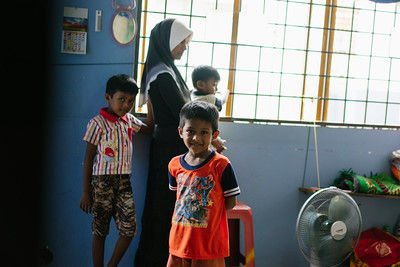
![Indigenous Aboriginal and Torres Strait Islander children in Australia [Photo Credit: The Wire/Pixabay]](https://static.wixstatic.com/media/d0bbf9_4fe1d813b33c402497d5a6dd14ddc8a8~mv2.png/v1/fill/w_512,h_384,al_c,q_85,enc_avif,quality_auto/d0bbf9_4fe1d813b33c402497d5a6dd14ddc8a8~mv2.png)
Australia has refused to accept most of the recommendations from the United Nations (UN) member states, including recommendations to raise the age of criminal responsibility, protect people seeking asylum, and make changes to address climate change, said Human Rights Watch. The Prime Minister Anthony Albanese's Labor Party government accepted only 128 of the 332 recommendations issued as part of the Universal Periodic Review (UPR), reducing the acceptance rate to 38 per cent, down from 51 per cent in 2021. The UPR is a mechanism of the UN Human Rights Council through which the human rights records of member states are reviewed every four and a half years.
One of the recommendations made by 27 member states, including Germany, France and Norway, was to raise the age of criminal responsibility, as the current policy allows children as young as 10 to be arrested, convicted and incarcerated. This law disproportionately affects the children of the First Nations, a term referring to the Aboriginal and Torres Strait Islander Peoples of Australia. A warning from the UN Committee on the Elimination of Racial Discrimination (UNCERD) stated that First Nations children face racial discrimination in Australia’s justice system. This includes racial profiling and policing leading to imprisonment and policies enforcing life sentences on children under the pretext known as “Adult crime, adult time”. This is a policy in which some Australian States allow children to be sentenced as adults for serious crimes and can have harsh penalties regardless of their age. Children also face harsh conditions while in detention, including solitary confinement.
The minimum age of criminal responsibility in Australia is lower than required under human rights law in most countries, which is recommended by the UN Committee on the Rights of the Child to be set at 14 years old. First Nations children in Australia are also overrepresented in the youth justice system, constituting 60 per cent of the prison population despite making up only about 6 per cent of the general child population.
Annabel Hennessy, Australia researcher at Human Rights Watch, said: “Australia claims it takes its human rights obligations seriously, yet ignored the majority of the recommendations resulting from the UN review process”. In response, Australian authorities acknowledged that they “must do more to address the overrepresentation of Aboriginal and Torres Strait Islander peoples in the criminal justice system” and that they will commit to improving youth justice systems.
Amnesty International stated that the UPR was a good opportunity for the Australian government take action to uphold its human rights obligations; however, by rejecting the majority of the recommendations, “Australia has missed an important opportunity to deliver reforms that would make a real difference to people’s lives.” Australia continues to fall short under international human rights law and fails to protect the rights of First Nations children. Amnesty International has called on the Australian government to reconsider the recommendations that it rejected and to work towards turning human rights obligations into “meaningful action.”
Glossary
Aboriginal and Torres Strait Islander (First Nations people) - They are the first people of Australia and are not just one group but comprise hundreds of groups that have their own distinct languages, culture and traditions.
Criminal Responsibility - An individual has reached an age where they can be convicted of a crime by law.
Climate change - It is the long-term shift in global temperatures and weather patterns which is caused by human activities such as burning fossil fuels.
Committee on the Elimination of Racial Discrimination (CERD) - It is a United Nations body comprising 18 independent human rights experts that monitors how member states implement the international convention.
Detention - The act or condition of being officially forced to stay in a place.
Disproportionately - A lack of proportion, symmetry, or proper relation affecting one group more than others.
Human Rights Watch - It is an international non-governmental organisation that is responsible for investigating and documenting human rights abuses worldwide.
Ill-treatment - The act of treating someone badly, especially by being violent or by not taking care of them.
Incarcerated - To put or keep someone in prison or confined,
Indigenous - This refers to people who originally lived in a place.
International Human Rights Law - This is a body of public international law created to promote and protect the freedoms of individuals and for countries to follow and fulfil these rights.
Member States - These are countries that form a political or economic organisation.
Over-represented - This is a type of person or group of people that are in the majority.
Proportionate - This is when a punishment or sentence needs to be fair and appropriate to the crime that has been committed and go no further than what is necessary.
Racial discrimination - This is when an individual is subjected to unfair treatment based on their race, skin colour, ethnicity or national origin.
Racial profiling - The practice of police assuming that a particular race or colour will behave in a certain way.
Recommendations - These are suggestions or advice that something is good for a particular purpose.
Reconsider - It is to think again about a previous decision and decide if you want to change it.
Reform - This is to make an improvement by changing the structure of something.
Rejected - This is when something has not been gien approval or acceptance.
Solitary Confinement - It is a harsh form of imprisonment where an individual is isolated.
United Nations Committee on the Rights of the Child - It is a body of 18 independent experts that monitors implementation of the Convention on the Rights of the Child and monitors involvement of children in armed conflict, child trafficking and prostitution.
Universal Periodic Review (UPR) - The Human Rights Council calls for UN member states to review their human rights records every 4.5 years to report on the actions the country has taken to improve human rights and to receive recommendations to improve.